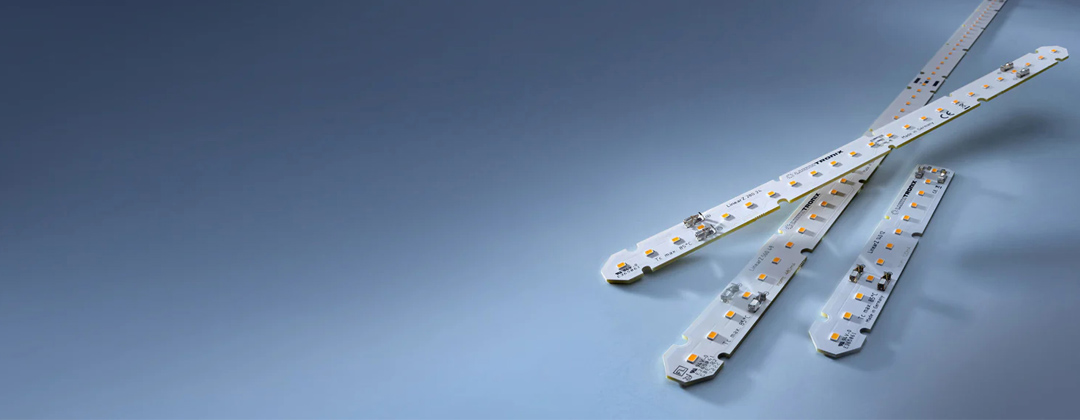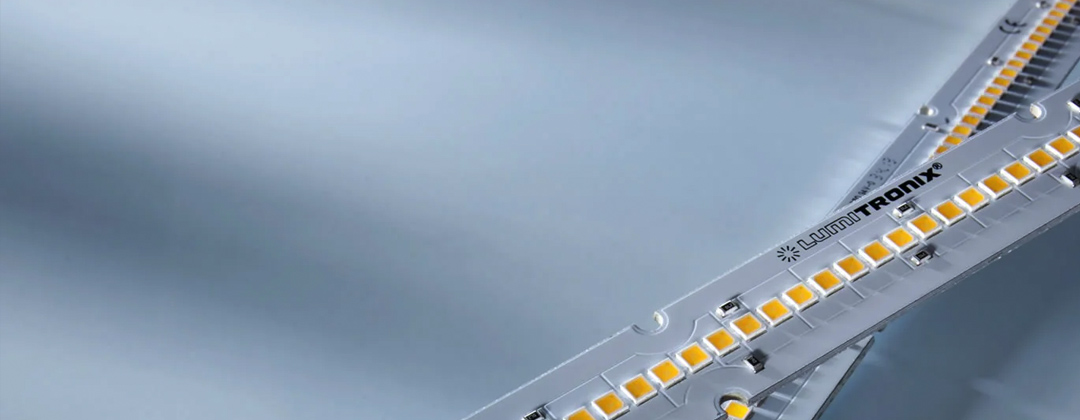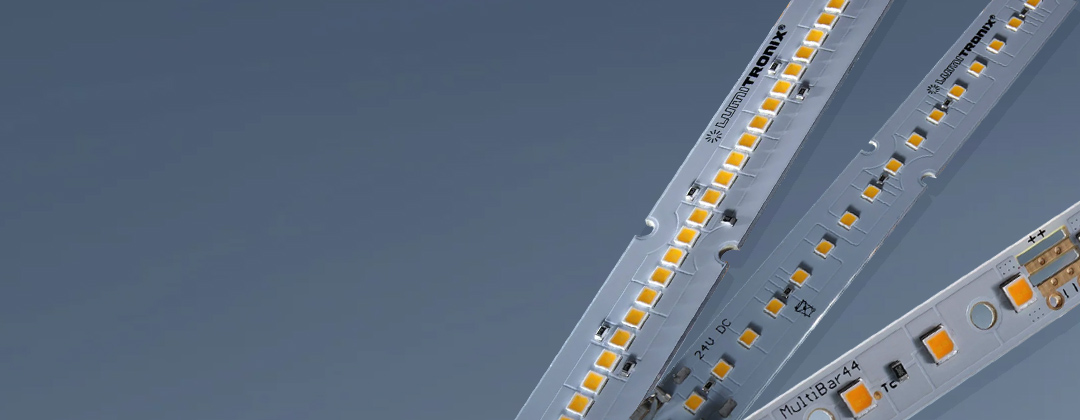
Nichia 757 Hortisolis LEDs with 5000K
Plug & Play system to build diverse light shapes
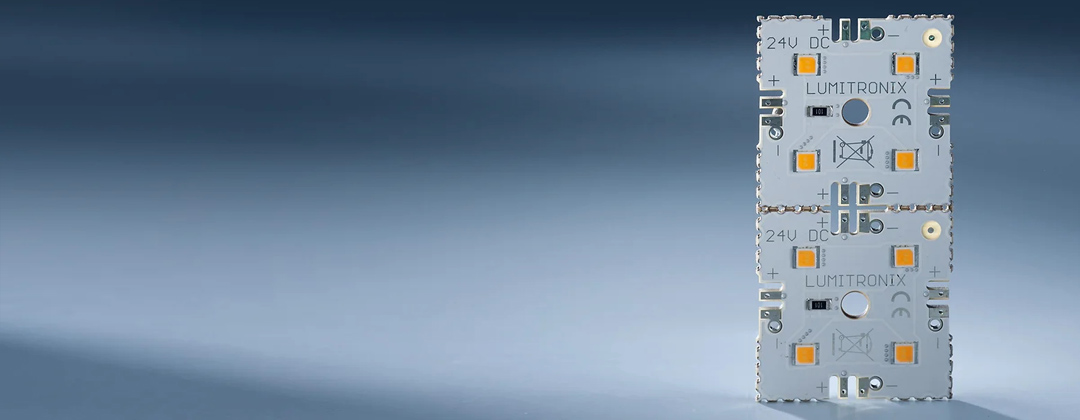
Base Module 3 x 3 cm with 4 LEDs (up to 133 LEDs/m)
24V Constant Voltage for easy installation

Horticulture lighting with LEDs refers to the use of LED lighting systems to provide the necessary light spectrum for plant growth in indoor and controlled environment agriculture (CEA). LED horticulture lights are designed to optimize the light spectrum, intensity, and duration to enhance photosynthesis and plant development, offering a more efficient and sustainable alternative to traditional lighting systems such as high-pressure sodium (HPS) or fluorescent lamps. These LED systems can be tailored to meet the specific needs of various plants, making them ideal for use in vertical farms, greenhouses, and indoor gardening setups.
We manufacture in Germany LED Strips & Modules with Nichia Hortisolis LEDs featuring an ideal spectrum for horticulture that also enhances visibility for workers.
Upgrading to LED horticulture lighting that features high-quality Nichia's Hortisolis™ LEDs offers numerous benefits for indoor farming. These include enhanced energy efficiency, optimized light spectra, long lifespan, and improved plant growth and yield. By choosing Hortisolis LEDs, growers can create more efficient, sustainable, and productive growing environments, contributing to the future of agriculture.
Hortisolis™ is a series of white LEDs developed by Nichia, specifically designed for horticultural applications. These LEDs incorporate a combination of phosphors to provide a light spectrum that is ideal for plant growth while enhancing visibility for workers.
Hortisolis™ LEDs are the result of extensive research and experiments conducted in Nichia's own vertical farm. They offer a balanced light spectrum that includes blue, red, far-red, and green light, which are essential for plant photoreceptors such as cryptochrome, phototropin, and phytochrome.


The experiment results in Nichia's own vertical farm prove the top performance of Nichia Hortsolis LEDs, with more than double growth for some plants, compared to conventional Ra80 LEDs:
[Example 1] Leaf lettuce growth test: 1.5 times increase in the total weight
 1 PFD: photon flux density, the number of photons that pass through a unit area in a unit of time.
2 These comparative growth tests were performed using Nichia light sources.
3 The above result (amount of harvest) is a month after the observation period.
4 The weight of a harvest is greatly affected by the conditions. Nichia suggests not to focus on the absolute value, but instead see the comparison with conventional lighting.
[Example 2] Edible viola growth test: 1.4 times increase in the number of petal

1 PFD: photon flux density, the number of photons that pass through a unit area in a unit of time.
2 These comparative growth tests were performed using Nichia light sources.
3 The above is a result of 2 month observation period.
4 The weight of a harvest is greatly affected by the conditions. Nichia suggests not to focus on the absolute value, but instead see the comparison with conventional lighting.
[Example 3] Cherry tomato growth test: Fast growth and more than double the harvest weight

1 PFD: photon flux density, the number of photons that pass through a unit area in a unit of time.
2 These comparative growth tests were performed using Nichia light sources.
3 The above is a result of 2 months observation period.
4 The weight of a harvest is greatly affected by the conditions. Nichia suggests not to focus on the absolute value, but instead see the comparison with conventional lighting.
[Example 4] Cherry tomato growth test: Easy to verify the degree of growth

LED horticulture lighting, particularly with the use of high-quality LEDs like Nichia's Hortisolis™, offers numerous benefits for indoor farming. These include enhanced energy efficiency, optimized light spectra, long lifespan, and improved plant growth and yield. By choosing high-quality LEDs, growers can create more efficient, sustainable, and productive growing environments, contributing to the future of agriculture.