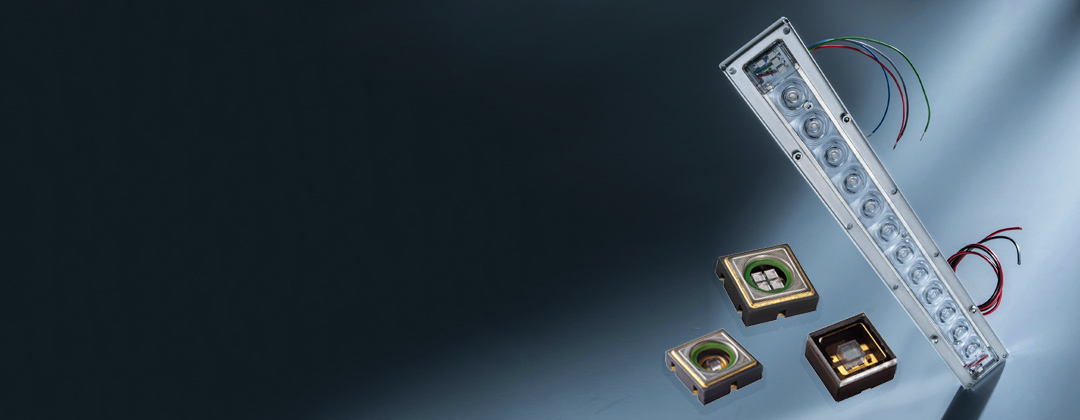

Nichia UVA LEDs, the newest generation 233 & 333 series
Aluminum PCB, 10x10mm, 30x30mm or 21x19mm
365, 385 or 405nm UVA LEDs 1600-5000mW
Constant Current 1000-3500mA

UV curing is a process that uses ultraviolet light to initiate a photochemical reaction that cures or hardens coatings, inks, adhesives, and other materials. This technique is widely used in various industries, including printing, automotive, electronics, and manufacturing, due to its rapid curing times, enhanced durability, and superior finish quality. UV curing offers a cleaner and more environmentally friendly alternative to traditional thermal drying methods.
In collaboration with Nichia, the leading UV LED manufacturer, we produce high-quality UV LED modules in Germany that are powerful and efficient solution for curing. These modules combine our 20 years of LED lighting experience with Nichia's expertise in UV LED manufacturing, ensuring exceptional radiant power, energy efficiency, and longevity. Our LED modules can be tailored to meet specific needs of industry, luminaire manufacturers or medical technology companies.
Our UV modules use the latest generation Nichia UV LED series:
Nichia UVA:
Nichia UVC and UVB:
UV curing can be achieved using a range of ultraviolet wavelengths, each suitable for different materials and applications. The UV spectrum is divided into three primary bands: UVA, UVB, and UVC. Here’s a detailed overview of the wavelengths used for UV curing:
Choosing the appropriate UV wavelength for curing is crucial as it impacts the efficiency, depth, and quality of the cure. The selection depends on the material being cured and the desired properties of the final product:
1. Rapid Curing Time: UV curing dramatically reduces the curing time compared to traditional methods. Materials can cure in seconds or minutes rather than hours, significantly increasing production speed and efficiency.
2. Enhanced Durability: UV-cured materials exhibit superior hardness, chemical resistance, and adhesion properties. This enhanced durability makes them ideal for applications requiring long-lasting and robust finishes.
3. Improved Quality: UV curing provides a high-quality finish with excellent clarity and gloss. It ensures uniform curing, reducing defects such as uneven surfaces, bubbles, or shrinkage.
4. Energy Efficiency: UV curing systems consume less energy compared to thermal curing processes. They require less heat and can operate at lower temperatures, resulting in reduced energy costs and a smaller carbon footprint.
5. Environmental Benefits: UV curing eliminates the need for solvents and volatile organic compounds (VOCs), making it an environmentally friendly option. This reduction in hazardous emissions contributes to a safer workplace and less environmental impact.
6. Versatility: UV curing can be applied to a wide range of materials, including plastics, glass, metals, and composites. This versatility makes it suitable for various industrial applications, from coatings and inks to adhesives and sealants.
Using high-quality Nichia UV LED modules in curing applications is crucial for several reasons:
1. Superior Performance and Reliability: High-quality Nichia UV LED modules ensure consistent and reliable performance. They provide stable UV light output with precise wavelengths, ensuring uniform and thorough curing of materials.
2. Enhanced Efficiency: Nichia UV LED modules are highly efficient, converting more electrical energy into UV light and less into heat. This efficiency reduces operational costs and enhances the overall performance of the curing system.
3. Longevity: High-quality Nichia UV LED modules are designed to last longer, with superior materials and construction that withstand the rigors of continuous operation. This durability translates to fewer replacements and lower maintenance costs, improving the return on investment.
4. Safety and Environmental Impact: Nichia UV LED modules adhere to strict safety standards, ensuring safe operation in curing systems. They are also environmentally friendly, containing no hazardous materials like mercury, and contribute to reduced energy consumption and lower carbon emissions.
5. Precision and Control: Nichia's expertise in LED technology ensures that their UV modules provide precise and controlled light output, essential for the consistent and high-quality curing of materials. This precision enhances the accuracy and efficiency of the curing process.
1. Printing Industry Nichia UV LED modules are ideal for curing inks and coatings in the printing industry. They ensure rapid curing times and high-quality finishes for various printing processes, including offset, flexographic, and digital printing.
2. Automotive Industry In the automotive industry, Nichia UV LED modules are used to cure coatings and adhesives, providing durable and resilient finishes for vehicle components. This application enhances the longevity and performance of automotive parts.
3. Electronics Industry Nichia UV LED modules are used for curing adhesives and encapsulants in electronic device manufacturing. They provide precise and reliable curing, ensuring the integrity and performance of electronic components.
4. Manufacturing and Assembly UV LED modules from Nichia are employed in various manufacturing and assembly processes to cure adhesives, sealants, and coatings. They enhance production efficiency and product quality across different industrial sectors.
5. Medical and Dental Applications Nichia UV LED modules are used in the medical and dental fields for curing resins and coatings. They provide rapid and effective curing, ensuring the durability and performance of medical devices and dental restorations.
UV lighting for curing is an advanced and efficient process widely used across multiple industries to enhance production speed, product durability, and finish quality. The use of high-quality Nichia UV LED modules in these applications ensure superior performance, reliability, and efficiency. High-quality modules provide consistent UV light output, enhanced precision, and longer lifespan, making them essential for effective and sustainable curing processes. Nichia's expertise in LED technology ensures that their UV LED modules meet the stringent requirements of modern curing applications, contributing to the advancement of manufacturing processes and the production of high-quality, durable products.