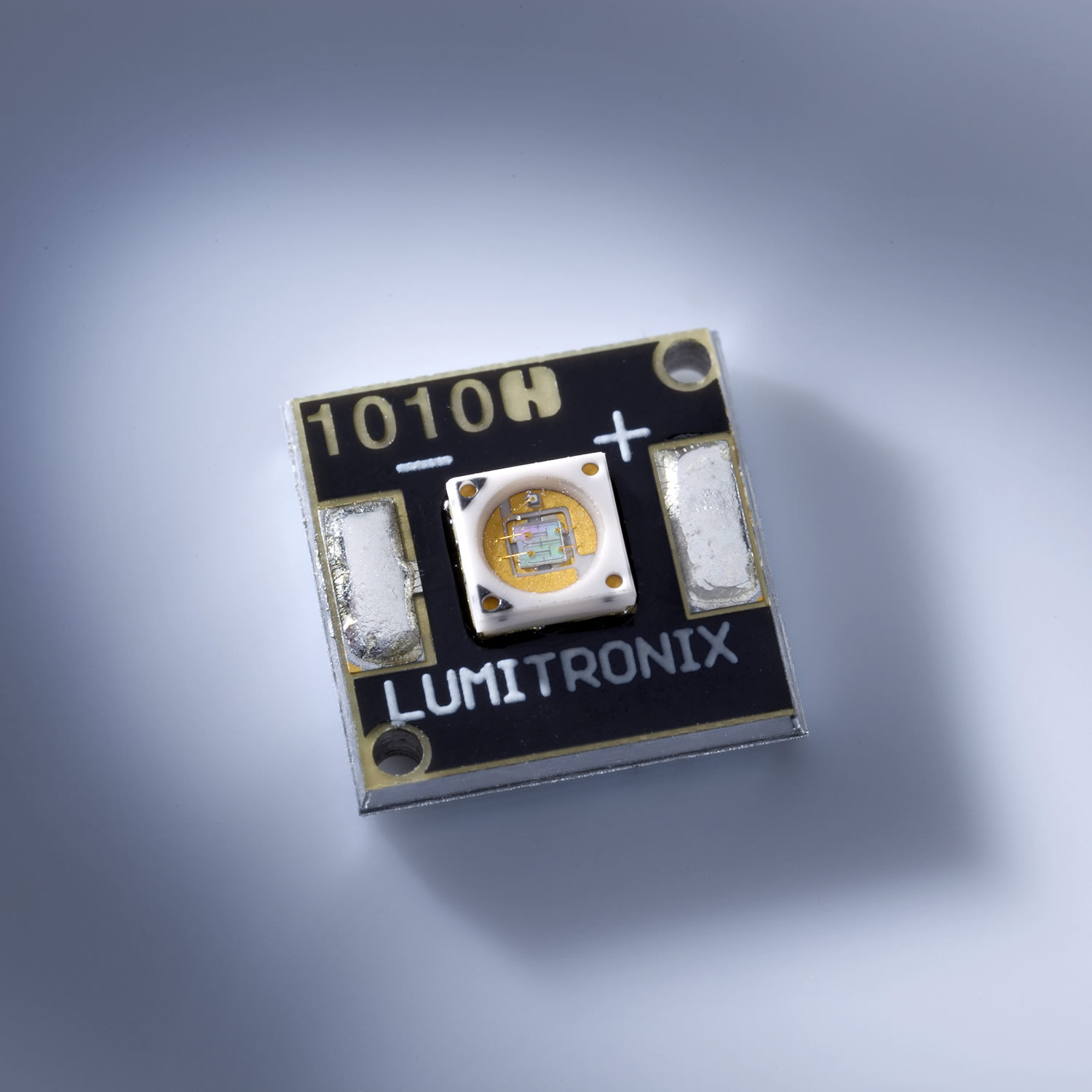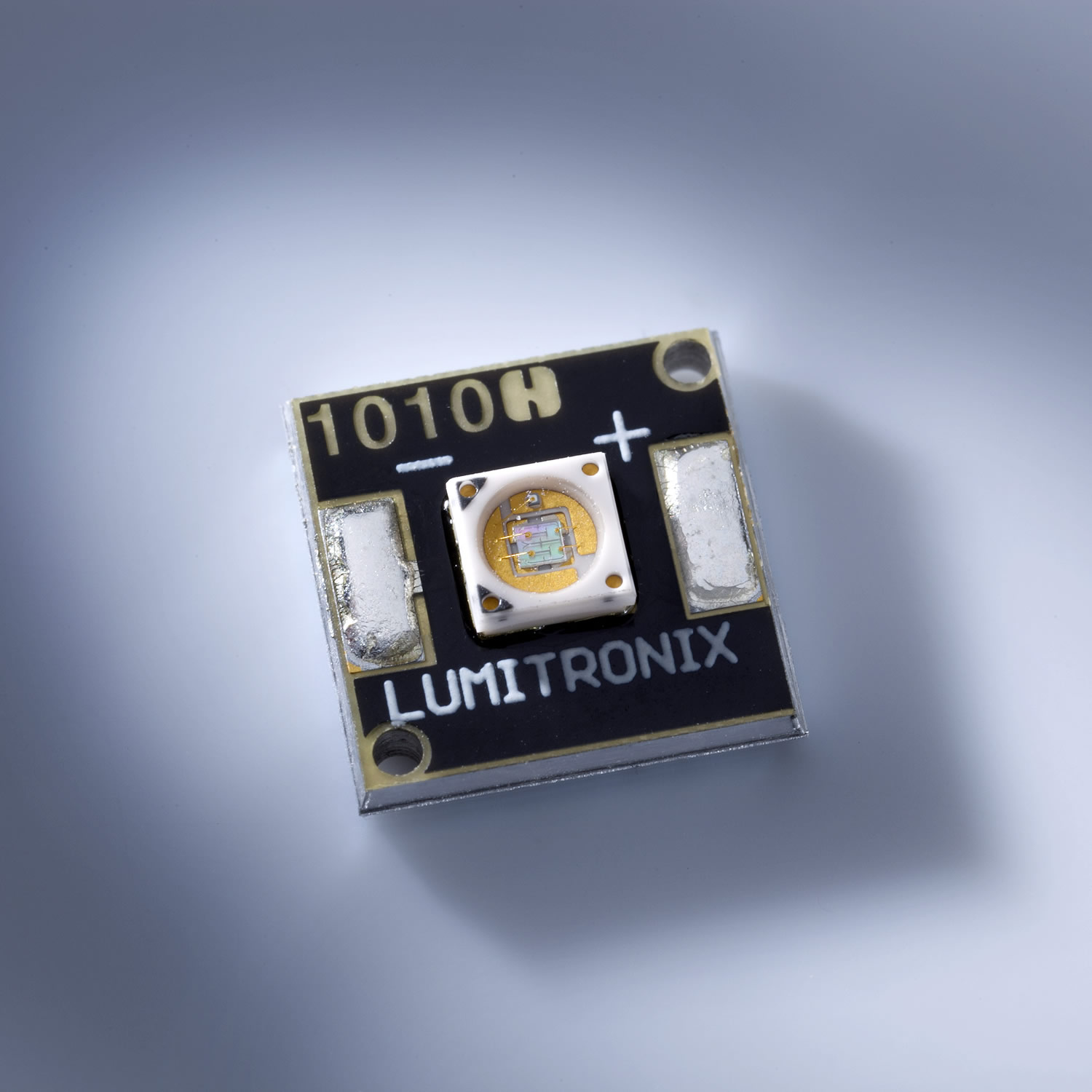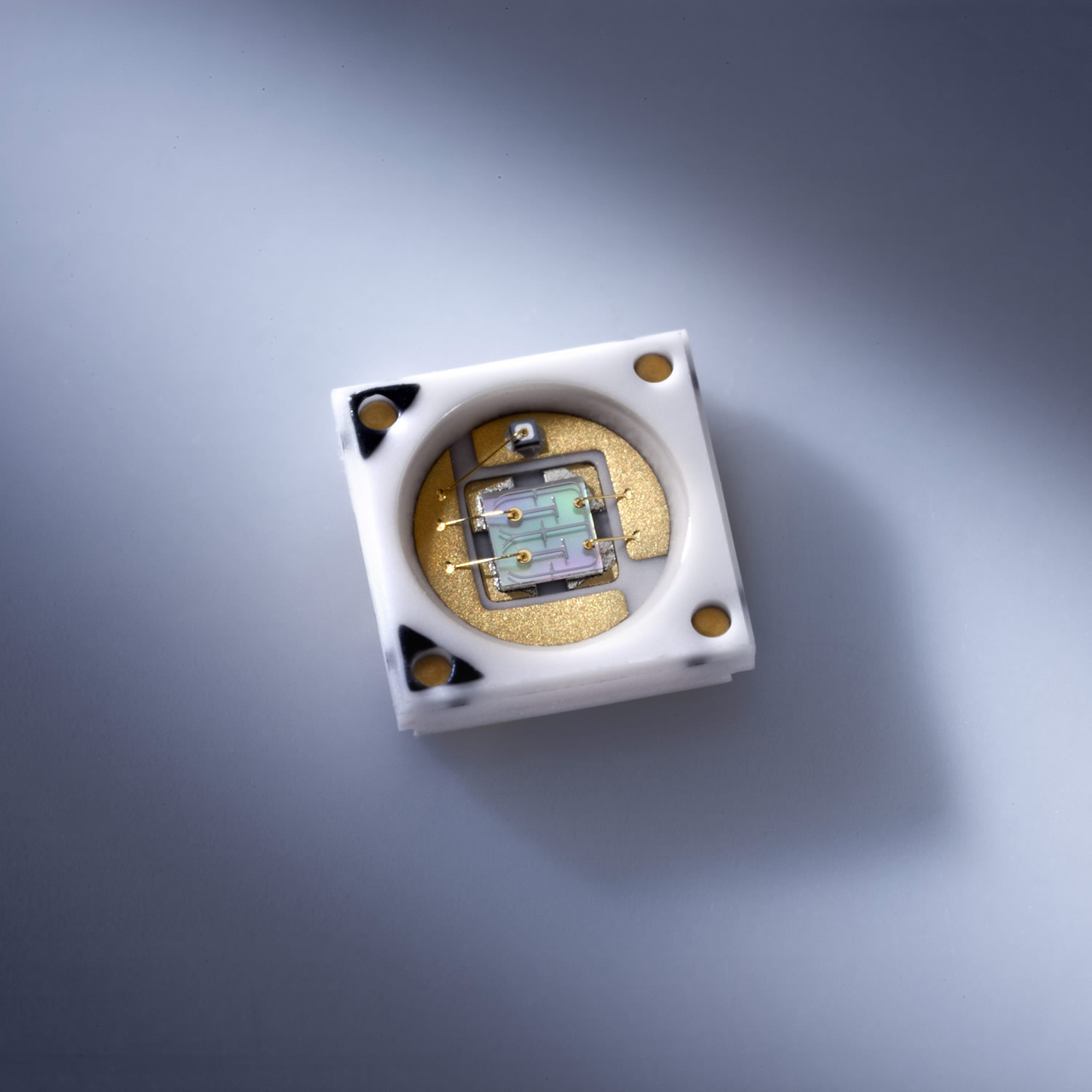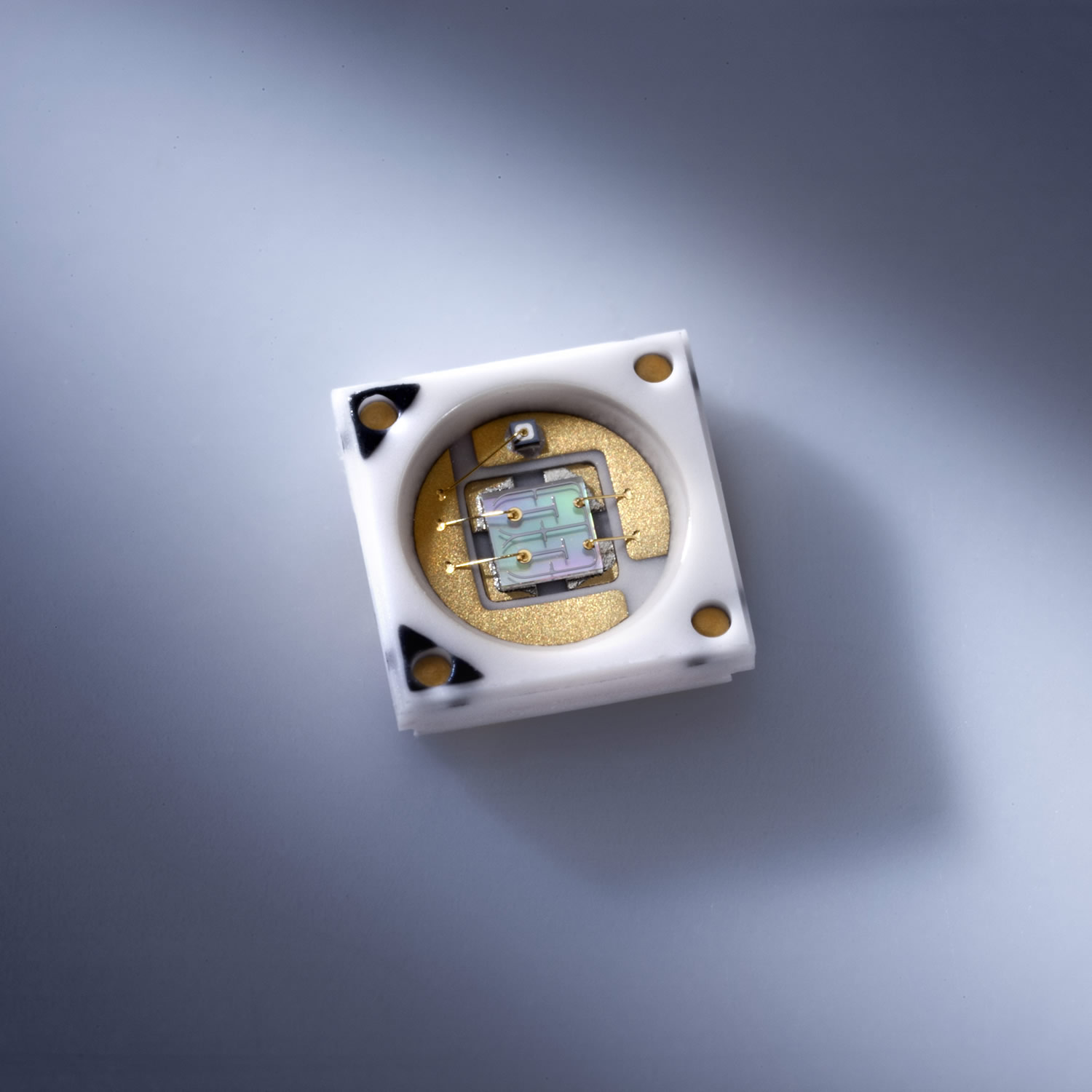
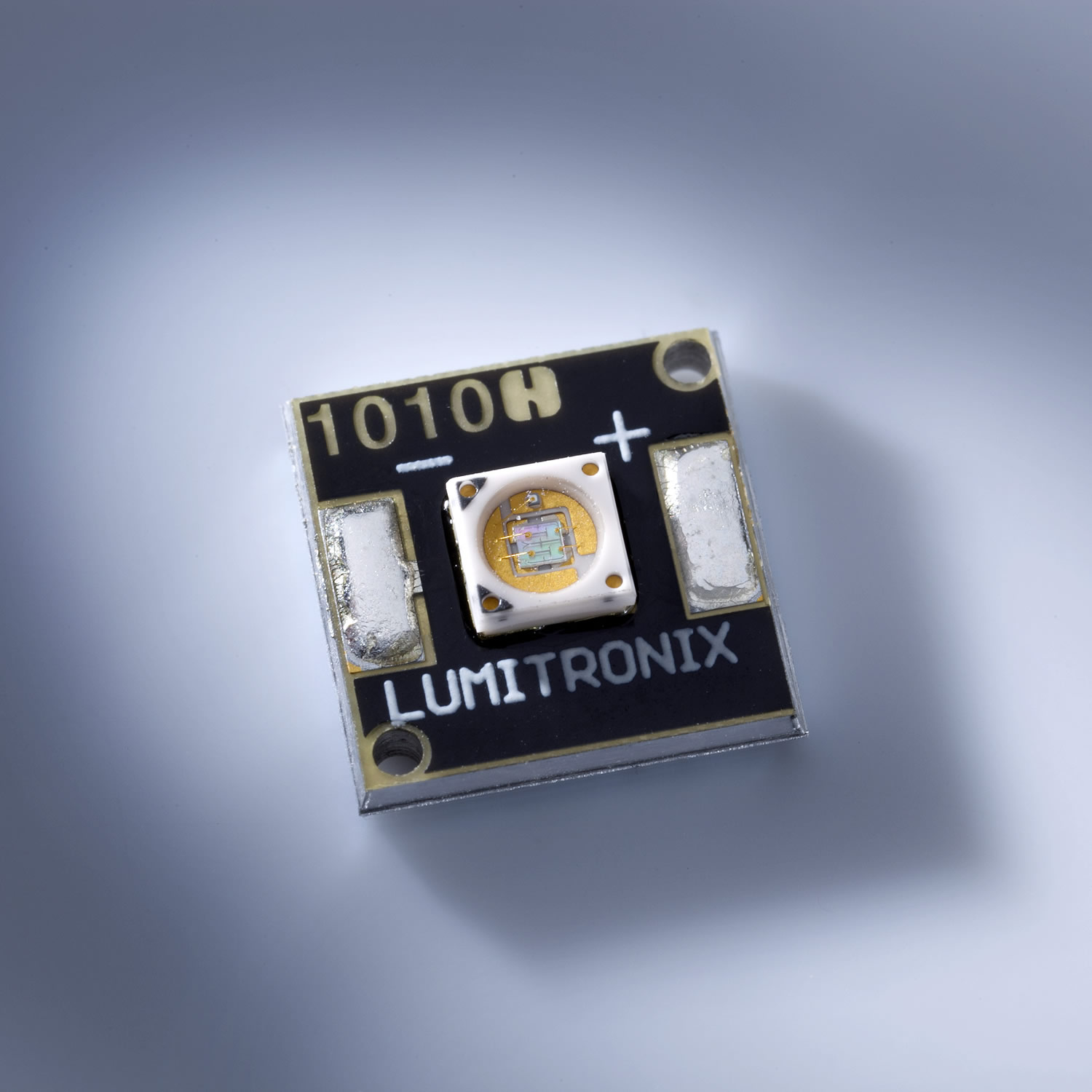
Nichia SMD LED UV NCSU275 365nm 350mW at 500mA 1.85W Emitter
- High-performance UV LEDs from one of the largest LED manufacturers in the world
- Nichia LEDs provide maximum durability, brightness, and homogeneity
- The fine selection of Nichia LEDs allows for greater added value for professional processing
- PCB LED modules make it easy to harness the power of the Nichia LED for your application without the need for reflow soldering or a sophisticated soldering station
- The NCSU 275 is available in three different wavelengths and is ideal for use in industrial applications
- Nichia LEDs are made with the highest quality materials, ensuring the best heat transfer and longest LED lifetime
- Solder pads are easy to connect with a basic soldering iron, making the PCB LED great for small projects, rapid prototyping, or custom builds.

The Nichia SMD LEDs in the UV light range provide high performance for a wide range of applications. With three different wavelengths available, these LEDs are designed to deliver maximum durability, brightness, and homogeneity. Additionally, Nichia's fine selection enables greater added value for professional processing. The NCSU 275 is ideal for use in industrial applications, with a wavelength of 405nm and a power of 370mW.
However, it is important to note that these LEDs emit invisible light, which can pose a danger to the eyes, even with short-term radiation. Please consult our employees for advice on this product before ordering.
Features
- SMD LED UV
- 275 Package
- wavelenghts: 365nm, 385nm, 395nm and 405nm
- 350mW
- Risk group 3 (EN 62471)
- Dimensions (LxWxH): 3.5x3.5x0.88mm
Application areas
- medical engineering
- test and sorting machines
- hardening
- cameras with UV light
Warning Actinic UV danger for eyes and skin
Ultra violet radiation in the wavelength range of 200-400nm may cause inflammation of the cornea as well as a UV erythema (sunburn) of the skin. The biological effectiveness of the UV radiation varies in the stated wavelength range and is described with the spectral response function (weighting scale) SUV.
UV-A danger for the eyes
Ultra violet radiation in the wavelength range of 315-400nm (UV-A) is for the most part absorbed by the eye lens and may cause UV cataracts (clouding of the lens of the eye).
| SKU | 14330.03 |
|---|---|
| Weight brut (g) | 1.000000 |
| LED Size | 3.5x3.5 mm |
| LED Family | Nichia UV (New!) |
| LED Installation Package | Emitter |
| Color | UVA Ultraviolet |
| Viewing Angle | 120° |
| Forward Current Typ | 500ma |
| Forward Voltage Typ (V) | 3.65 |
| LED Power (W) | 1.83 |
| Product lifetime (h) | 60000 |
| Wavelength (nm) | 365 |
| Manufacturer Product Code | NCSU275 Ua365/Pz-P1/Lk1-M2 |
| Brand | Nichia |
| Availability beyond shown stock: | YES |
| Dimensions: Length (cm) | 0.35 |
| Dimensions: Width (mm) | 0.90 |
| Dimensions: Height (mm) | 0.35 |