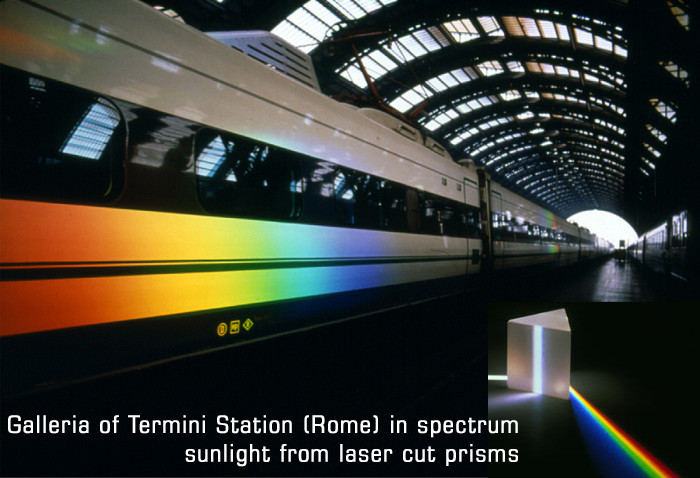
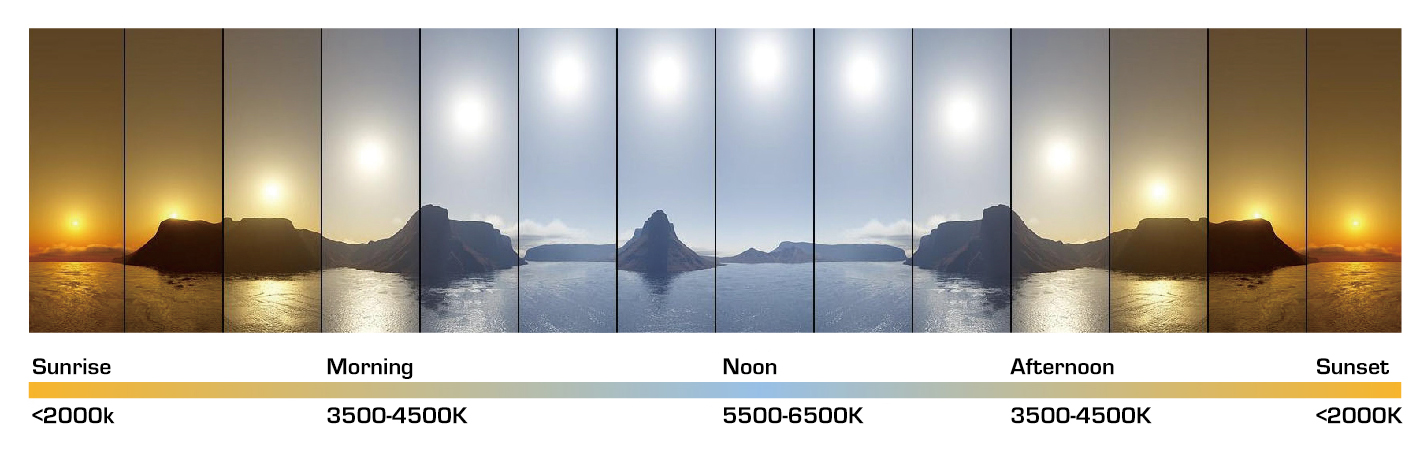
Natural light is a beautiful and dynamic source of white light, with its tone and brightness changing throughout the day and the seasons. The tone of white light is called color temperature, which is measured in degrees Kelvin (K). The color temperature of natural light changes during the day, from a warm orange-red hue of about 2000K at sunrise and sunset to a cooler blue-white hue of about 5500-6500K at noon. In the shade, the color temperature can even reach up to 8000-10000K, which is an extremely cool blue-white hue.
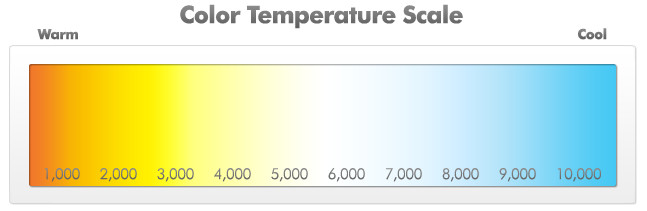
Artificial light sources are available with all relevant color temperatures of sunlight. Some traditional light sources, such as incandescent lamps, can only be manufactured with a fixed color temperature of 2700K. However, with the advancements in LED lighting technology, we now have access to LED light sources that can be produced with a wide range of color temperatures, from 2000K to 10000K, with the most common color temperatures falling within the 2700K to 6500K range.
One of the key benefits of LED lighting is the ability to produce light at a specific color temperature, which can help create the desired mood or atmosphere in a space. LED lights with warm color temperatures, such as 2700K, can provide a cozy and relaxing atmosphere, making them great for use in living rooms, bedrooms, and other spaces where a sense of comfort is desired. Cooler white LED lights, with color temperatures in the 5000K to 6500K range, can help create a more energizing and focused atmosphere, making them ideal for use in offices, factories, and other workspaces.
An important factor to consider when selecting LED lighting color temperatures is the psychological and physiological effects of light on people. The color temperature of light can affect mood, energy levels, and even sleep patterns. Warm white light with a color temperature of 2700K to 3000K can have a calming effect on the body, making it a great option for spaces where relaxation is a priority, such as bedrooms or living rooms. Cooler white light with a color temperature of 5000K to 6500K can have an energizing effect, making it ideal for workspaces, such as offices or factories.