COB LED Lighting: Efficiency, Power, and Precision for Every Application
- By Ledrise Led Professional
- Oct 20, 2025
Recommended CRI color index for different lighting projects
The Comprehensive Guide to Choosing the Right Color Temperature for LED Lighting
Cove lighting guide with LED strips
Linear light fixture with LED strips lighting guide
Illuminated stretch ceiling LED lighting guide
Disinfection with UV Light, >99% Kill Rate for Viruses (incl COVID-19) or Bacteria
Achieving Effective Germicidal Action with UVC Radiation: A Comprehensive Guide
Human Centric Lighting with ajustable intensity and color temperature
Home lighting guide and recommeded light levels
How to get the best results from LED Backlighting: A Comprehensive Guide
Recommended light levels for office lighting with LED systems
The Guide to Energy Efficient Lighting: Principles and Applications
Advice for the purchase and use of equipment for the UV disinfection of air and surfaces
What defines an environmental friendly LED linear lamp?

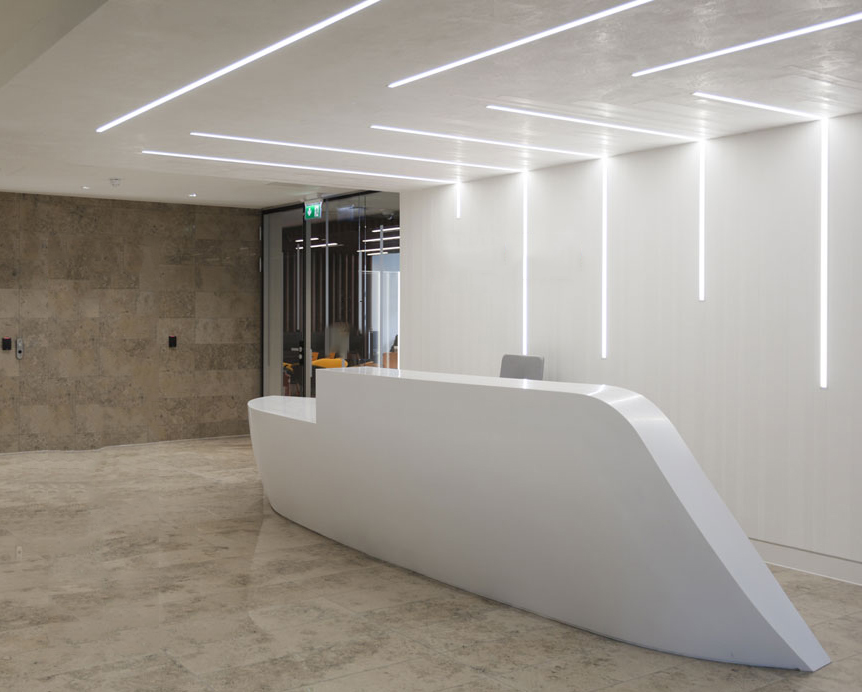
Lines of light are a new trend for interior lighting, especially because of the possibility to build a personalized installation. The iluminated lines can be place on walls or ceiling, in the form of recessed, surface or suspended lighting fixtures.
These lighting fixtures are made with an LED strip inside an aluminum profile that has a translucent white cover, can be many meters long, installed in patters or geometric shapes.

Compared with indirect cove lighting, also a popular trend in lighting design, lines of light are more energy efficient but can have greatly increased glare. For this reason direct lighting with lines of light should be designed with care and almost always be dimmable.
Let's see how we can achieve the best results with lines of light.
For residential applications, LED lights with a CRI of at least 90 are recommended for bedrooms, living rooms, bathrooms, and kitchens. For business applications, lights with a CRI of 80 are suitable for general work in offices, while lights with a CRI of 97 are recommended for offices where work with colors is involved, as well as design studios and photography studios. For commercial applications, LED lights with a CRI of 90 or higher are recommended for electronics stores, hardware stores, and jewelry stores, while lights with a CRI of 98 are ideal for interior design stores.
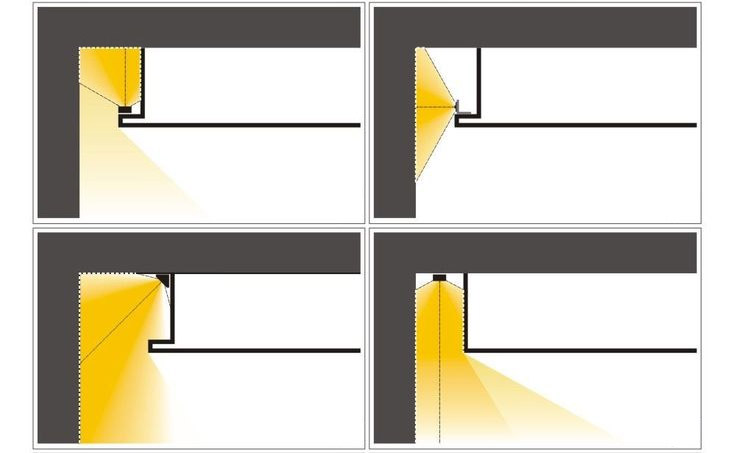
Cove lighting with LED strips has become increasingly popular in recent years as it offers a subtle and sophisticated lighting approach that can transform the mood and ambiance of a space. By utilizing LED strips hidden within a cove in the wall or ceiling, a seamless line of light can be created that illuminates surrounding surfaces and reflects into the room, creating a soft and gentle glow similar to natural light from a hidden window. In this blog post, we will explore the benefits and techniques of using LED cove lights in lighting design.

Advantages of LED Cove Lighting
LED cove lights are a versatile and energy-efficient lighting solution suitable for a wide range of interior spaces, including living rooms, bedrooms, kitchens, lobbies, restaurants, and retail spaces. The flexibility in design is one of the significant benefits of LED cove lights, as they can be installed in various shapes, sizes, and colors. This allows for endless possibilities in creating unique and captivating lighting designs that can be customized to meet individual preferences. LED cove lights also come with dimming capabilities, which allow for greater control over the intensity and mood of the light.
Another significant advantage of LED cove lights is their energy efficiency. Compared to traditional lighting sources such as incandescent or fluorescent bulbs, LED lights consume less energy and have a longer lifespan. This not only reduces energy costs but also lowers the environmental impact of the lighting system.
Factors to Consider for Cove Lighting Installation
Several factors need to be considered when installing LED cove lights, such as the location of the cove, the type of LED strips to use, and the color temperature of the light. Working with a professional lighting designer or electrician can ensure that the installation is done correctly and efficiently
Careful design of the lighting for your home will ensure that the right amount of light is where and when needed, switched on conveniently. Lighting should avoid over-lit areas, and give control and flexibility to create lighting effects for different situations. Well-designed lighting will be inherently easier to use and will function in an energy-efficient way.
The best approach to home lighting design is to use three levels of lighting: general lighting, task lighting and accent lighting. By combining these three levels, the recommended lighting level for each room or activity should be obtained, as below:
| Recommended lighting levels for the Home | in Lux |
| Living rooms general | 50-150 |
| Casual reading | 150 |
| Study | 150-750 |
| Bedroom general | 50-150 |
| Kitchen general | 150 |
| Kitchen working areas | 400 |
| Bathrooms | 150-300 |
| Halls and landings | 100-150 |
| Stairs | 100-150 |
| Dining rooms | 150-450 |
The three levels of lighting
1. General lighting should ensure a sufficient minimum level of light in the room. There are plenty of LED light sources that can be used for this purpose: LED modules, strips, luminaries or spotlight. Decide on the desired illuminance level (lux). In living rooms and bedrooms in particular, give a certain degree of flexibility (through control settings/dimmers) so that occupants can raise or lower the general lighting around the set level. Design for the upper end of the Lux ranges in homes with elderly occupants, which generally appreciate a higher level of general lighting. A minimum level of general lighting is required for safe movement in the home, especially on the stairs, but sufficient general LED lighting is considered important for general well-being.
2. Workplace lighting is needed for certain activities at home, such as reading, preparing food and working from home. LED lamps must be carefully selected, correctly positioned and controlled. Recommended are LED spot lights and high flux LED modules. Lamps or sockets are needed in the right places to ensure flexibility in the availability of work and accent lighting. Depending on the task, LED workplace lighting may be required at different levels. The color rendering of the light is also very important for some activities, we recommend LED lights with CRI 97 or more.
3. Accent lighting contributes to the ambiance of a house and is usually done with LED spots and strips. As with workplace lighting, LED luminaires (or sockets) are placed in the right places to emphasize architectural features, furniture and ornaments. Accent lighting is a more personal matter, and depending on the circumstances, spotlighting or floodlighting can be useful.
For each of these levels of lighting, controls can provide a range of lighting options. So in an living room there could be separate controlled circuits for:
Similar control patterns can be considered in other rooms, with dimmers providing a different lighting atmosphere in salons, dining rooms and bedrooms. Advanced controls, sometimes controlled by a mobile phone or a tablet app, that allow remote adjustment of the amount of light and its color are increasingly popular. Lighting is establishing itself as a lifestyle statement, and houses with new and innovative lighting systems are perceived as a marketing advantage.

LumProtect represents a groundbreaking advancement in LED lighting technology, offering an innovative lamination process that enhances the durability and flexibility of LED modules. This cutting-edge technology applies multiple polymer layers onto electronic assemblies, combining heat and high pressure to create a product that withstands environmental challenges without sacrificing flexibility. Key features include enhanced durability against environmental factors like humidity and UV rays, high transparency with minimal color shifts, and significant mechanical strength. The versatility of LumProtect extends to various applications, from outdoor flexible lighting solutions to aesthetically pleasing LED wallpapers for indoor spaces, demonstrating its adaptability in both residential and commercial settings.
The technology behind LumProtect involves a meticulous lamination process that maintains the flexibility of LED modules while increasing their resistance to physical and environmental stress. With technical specifications focusing on mechanical and optical parameters, LumProtect meets the highest standards of durability and visual quality. This article delves deep into the nuances of LumProtect, exploring its myriad applications, sustainability aspects, and the potential it holds for revolutionizing lighting design. For a comprehensive understanding of how LumProtect is setting new benchmarks in the world of lighting, we invite you to read the full article and discover the future of lighting technology.
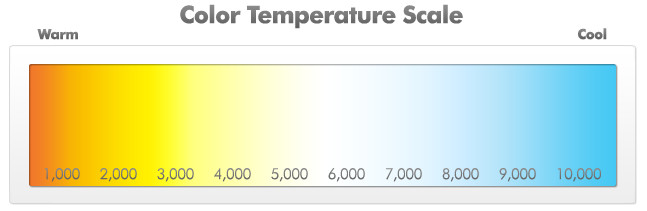
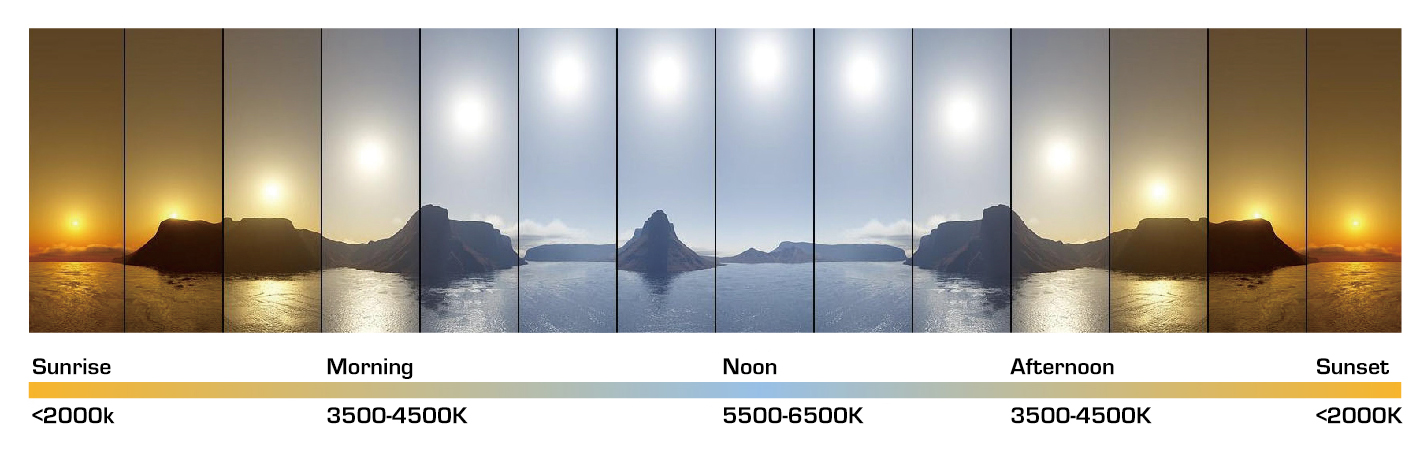
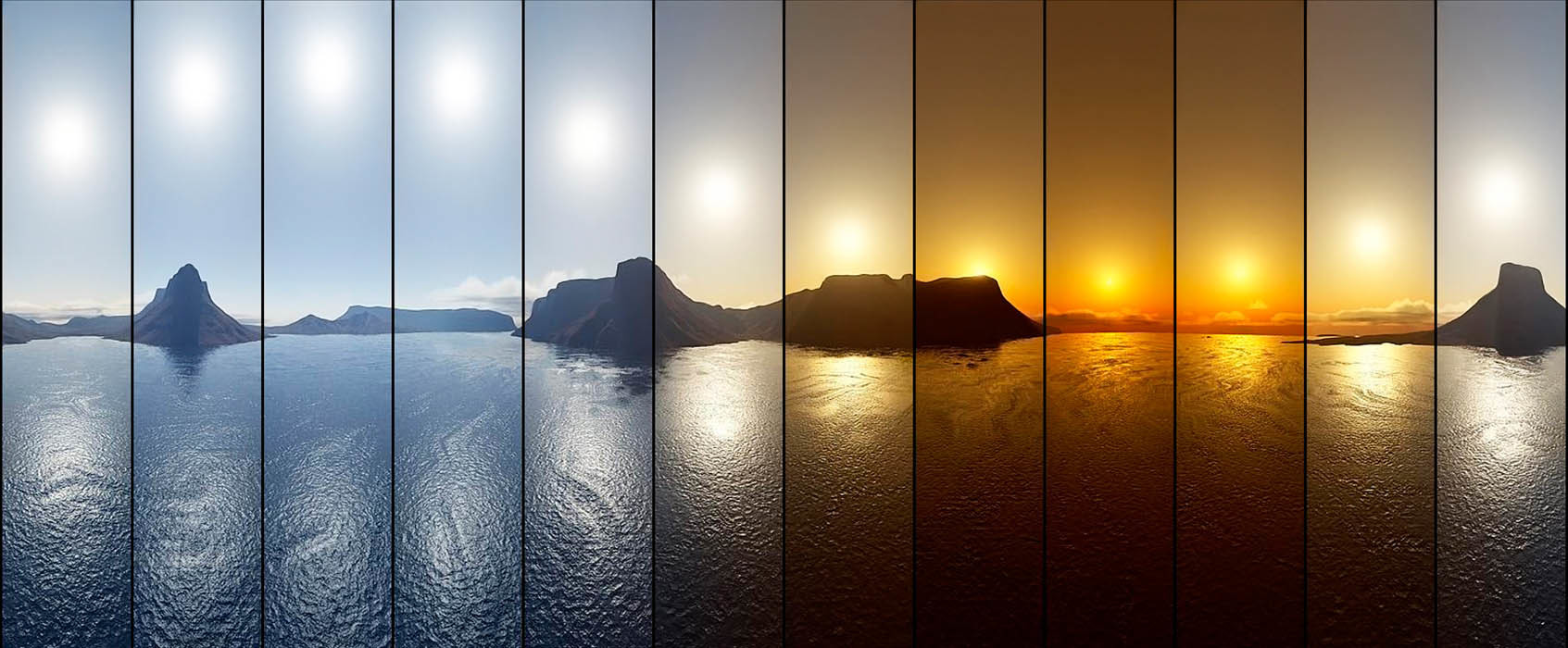
Natural light is a beautiful and dynamic source of white light, with its tone and brightness changing throughout the day and the seasons. The tone of white light is called color temperature, which is measured in degrees Kelvin (K). The color temperature of natural light changes during the day, from a warm orange-red hue of about 2000K at sunrise and sunset to a cooler blue-white hue of about 5500-6500K at noon. In the shade, the color temperature can even reach up to 8000-10000K, which is an extremely cool blue-white hue.


Artificial light sources are available with all relevant color temperatures of sunlight. Some traditional light sources, such as incandescent lamps, can only be manufactured with a fixed color temperature of 2700K. However, with the advancements in LED lighting technology, we now have access to LED light sources that can be produced with a wide range of color temperatures, from 2000K to 10000K, with the most common color temperatures falling within the 2700K to 6500K range.
One of the key benefits of LED lighting is the ability to produce light at a specific color temperature, which can help create the desired mood or atmosphere in a space. LED lights with warm color temperatures, such as 2700K, can provide a cozy and relaxing atmosphere, making them great for use in living rooms, bedrooms, and other spaces where a sense of comfort is desired. Cooler white LED lights, with color temperatures in the 5000K to 6500K range, can help create a more energizing and focused atmosphere, making them ideal for use in offices, factories, and other workspaces.
An important factor to consider when selecting LED lighting color temperatures is the psychological and physiological effects of light on people. The color temperature of light can affect mood, energy levels, and even sleep patterns. Warm white light with a color temperature of 2700K to 3000K can have a calming effect on the body, making it a great option for spaces where relaxation is a priority, such as bedrooms or living rooms. Cooler white light with a color temperature of 5000K to 6500K can have an energizing effect, making it ideal for workspaces, such as offices or factories.
The information below is extracted from the research paper: "Fluence (UV Dose) Required for up to 99% disinfection from Viruses, Bacteria, Protozoa and Algae" that can be downloaded also on our website at the links below:
Germicidal action of UV radiation
The effectiveness of sterilization or disinfection with UV light depends on the exposure, time, wavelength and irradiance.
Many studies that show the effectiveness of UV light in disinfection or sterilization present in their findings the inactivation of virus or bacteria for a given Exposure in an amount of time, for a given UV wavelength. However, it is difficult to centralize or build a database with so many variables. The most common solution to this problem is to present the fluence required to achieve a log reduction from 1 to 5.
Log reduction explained
"Log reduction" is a mathematical term (as is "log increase") used to show the relative number of live microbes eliminated from a surface by disinfecting. For example, a "5-log reduction" means lowering the number of microorganisms by 100,000-fold, that is, if a surface has 100,000 pathogenic microbes on it, a 5-log reduction would reduce the number of microorganisms to one, equal to 99.999% kill rate.
Human Centric Lighting (HCL) is an illumination specially designed to have a positive physiological and/or psychological effect on humans. It consists of adjusting the colour and intensity of the light throughout the day using adjustable white LED lighting solutions.
HCL supports human health, well-being and performance by considering and properly planning the implementation of a lighting system according to the desired visual, emotional and above all biological effects of light. Human Centric Lighting focuses on the needs of people for their living, leisure and working environment. The study is based on the properties and effects of natural light, a dynamic source of changing tone and brightness that changes throughout the day and seasons.

A combination of white LED light sources, usually warm white (2700K) and cold white (6500K), is used to provide adequate human-centred lighting. This solution is also called Tunable White lighting. By adjusting the intensity of each individual, bright or dull white light with a hue between 2700K and 6500K can be achieved. It is a new way of using and implementing artificial light, corresponding to the changes of natural light and research on the effects on humans.
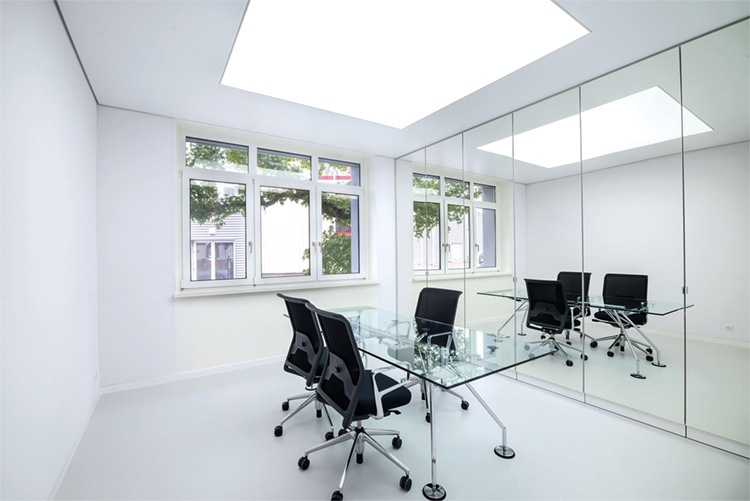
Illuminated stretch ceilings are an innovative lighting design solution that has gained popularity in recent years. They offer a wide range of advantages over traditional lighting systems, including uniform illumination, a relaxing ambiance, and minimal glare. Additionally, they can be used for a variety of lighting purposes, such as ambient lighting, general lighting, and even workplace lighting.
However, designing and installing an illuminated stretch ceiling can be a challenging task, and it is essential to take various factors into consideration to ensure optimal results. One of the most important factors to consider is the choice of materials, as the translucency of the stretch ceiling material plays a crucial role in determining the light transmission rate and overall illumination quality. The choice of lighting source is also crucial, as it can affect both the brightness and the energy efficiency of the stretch ceiling.
Another essential aspect to consider is the optimum distance between the LEDs and the stretch ceiling. To ensure even illumination, the LEDs must be evenly distributed behind the translucent material. Therefore, the distance between the light sources and the stretch ceiling should be at least 30 cm to a maximum of around 50 cm, depending on the type of LED used.
The shape of the illuminated stretch ceiling is also an essential factor to consider. It can be personalized and feature translucent images, which can greatly influence the overall design of the space. Additionally, spotlights or lamps can be used to highlight specific areas or objects, complementing the uniform light of the illuminated stretch ceiling.